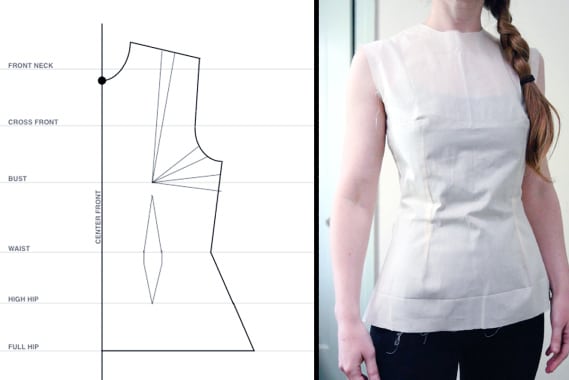
Tutorial: How to Make a Bodice Sloper to Design Your Own Patterns (The front)
If you want to start creating your own clothing from scratch and make your own designs, it’s a good idea to make a sloper based on your own unique body measurements. A sloper is a base template that you can make for your body that you edit and adjust to make other sewing patterns and designs.
This tutorial will walk you through step by step how to take your measurements and how to use those to draw out the front of your sloper. Check out Part 2 of this series to learn how to make the back of your sloper.
Part 2 of a sloper tutorial. Find instructions for the back of the sloper here
This is Part 1 of a two part tutorial. Find instructions for the back of the sloper here.
Disclaimer: I am not in any way a professional pattern maker. This is my amateur process for making a sloper that has worked to help me start creating my own patterns. If you’re a beginner at pattern making, my tutorial is a great place to start. However, if you want more precise instructions, I recommend Suzy Furrer’s Bodice Sloper class on Craftsy (not sponsored, I just legitimately found it to be useful)
Supplies Needed:
Measuring and (simple) Calculations:
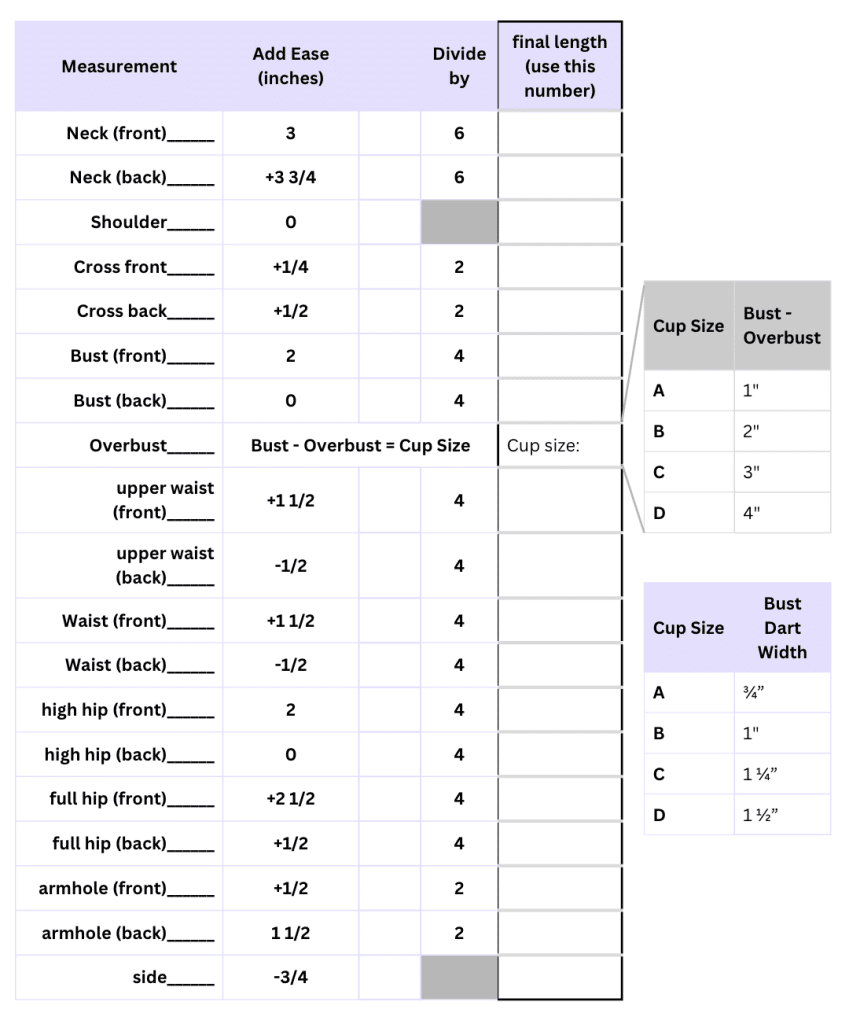
To make a sloper, you need a lot of body measurements. You also need to add ease so the sloper bodice isn’t completely skin tight, and divide the measurements because we’re only working with half the front (so just 1/4 of the body). I’ve created a PDF document with charts and diagrams to help you through the measurement and calculation process.
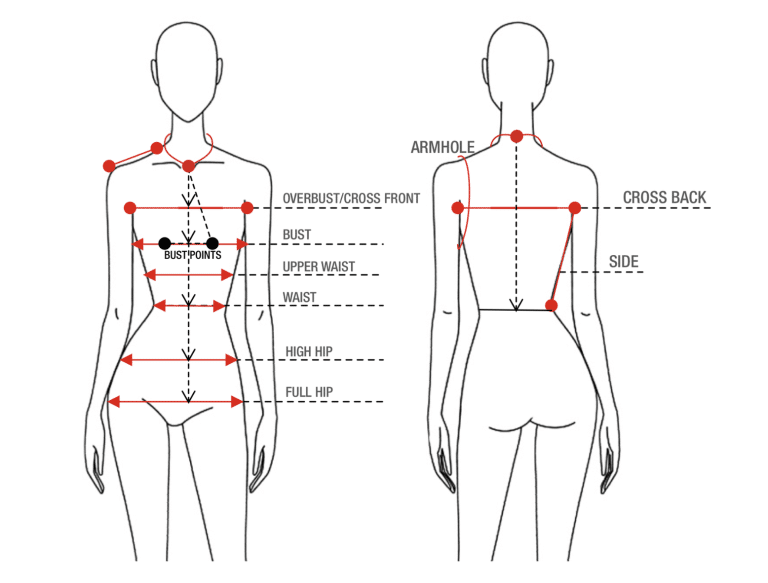
Measurements that you will need:
You will also need to take length measurements so you know the distance between everything:
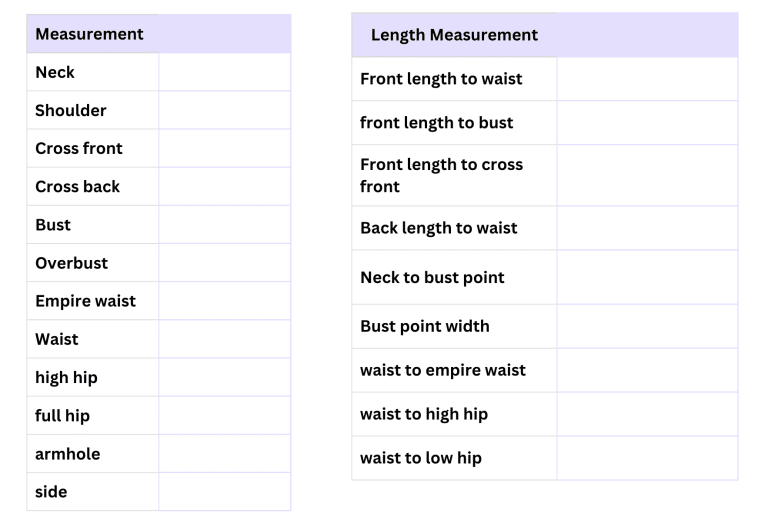
After you have your measurements, add them to the chart below. First you’ll add ease to each of your measurements. Then you’ll divide the resulting number (since we’re only working with half the front torso) to get your final length. Use the numbers inthe “final length” column while your going through my tutorial.
Step 1

Make your grid
Use your length measurements to create horizontal lines for the front of your bodice spaced out according to your measurements. Then draw a vertical line straight down to represent the center front.
Step 2

Set the center neckline point
Place a point on the center front line that is 3/4″ below the front neck line.
Step 3

set the shoulder point and draw the neckline
Draw in your shoulder point. Use the Neck (front) calculation to go in from the center front and then up the same distance.
Then draw a curved line connecting these two points to create your front neckline.

Step 4
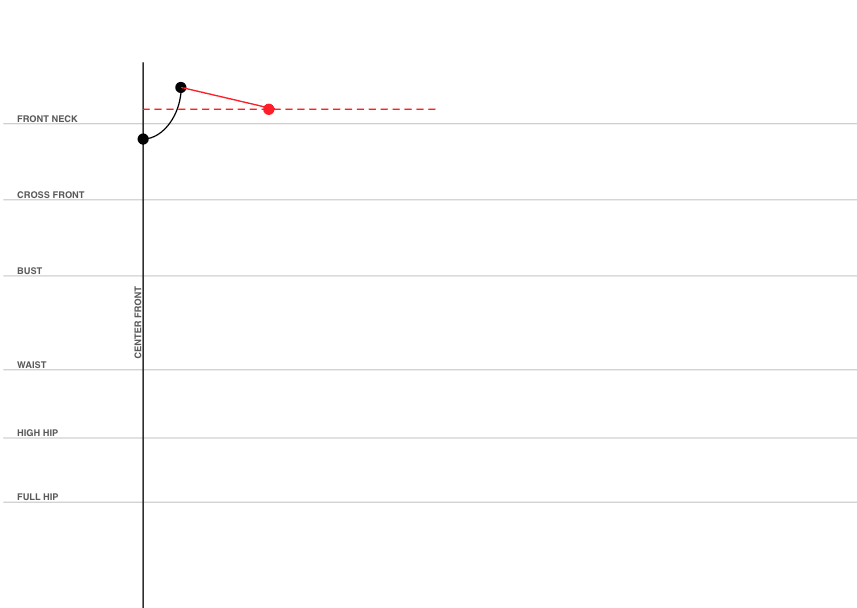
draw the shoulder length and darts
Draw a guideline halfway between the shoulder point and the front neck gridline.
Then take your shoulder measurement and add 1/2 inch because we are adding a dart. Draw a straight line that length connecting your shoulder point to the guideline.
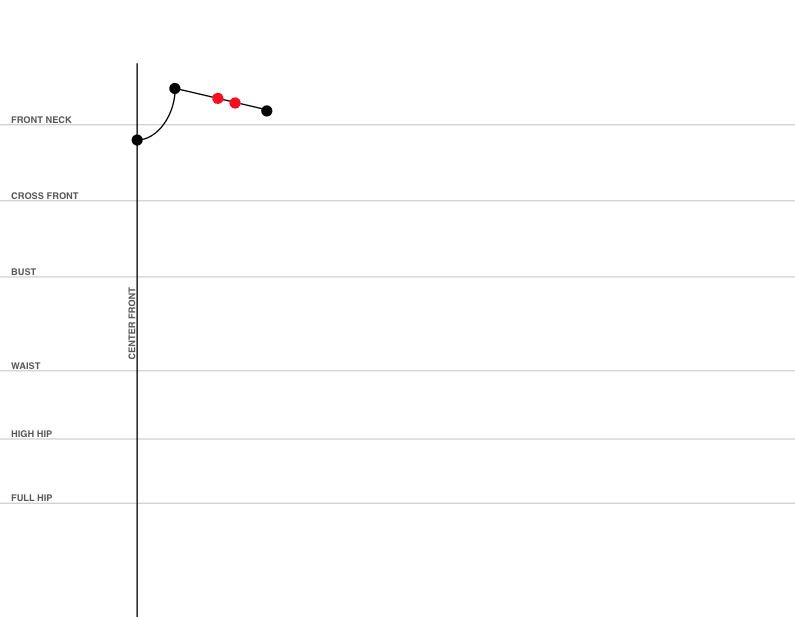
Then halfway on the line add two points 1/2 inch apart. These are the points for the shoulder dart.
Step 5
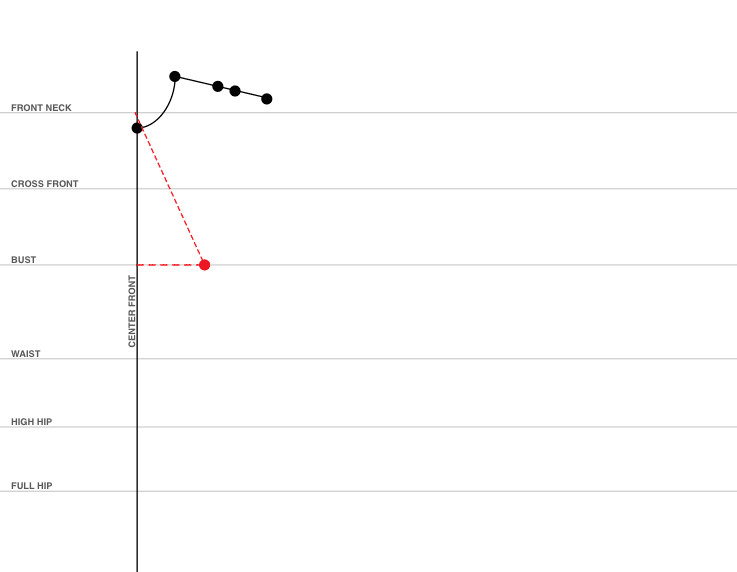
draw the high bust point and shoulder dart
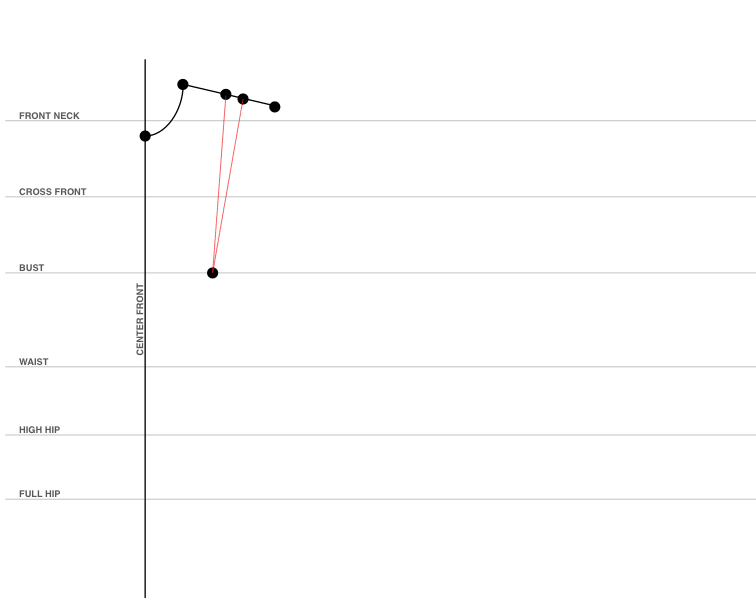
Draw a guideline using the Neck to Bust Point measurement. It should measure from the center front neck line to the bust line. This is the high bust point to use for the upper darts in the sloper.
To double check this placement is accurate, divide the Bust Point Width measurement by 2. Then draw a horizontal line on the bust guideline using that length. It should more-or-less meet up with the high bust point. If it is more than 1/2″ apart, draw a new high bust point on the bust line that is halfway in-between.
After you make your high bust point, draw the legs of the shoulder dart to this point.
Step 6
draw the low bust point
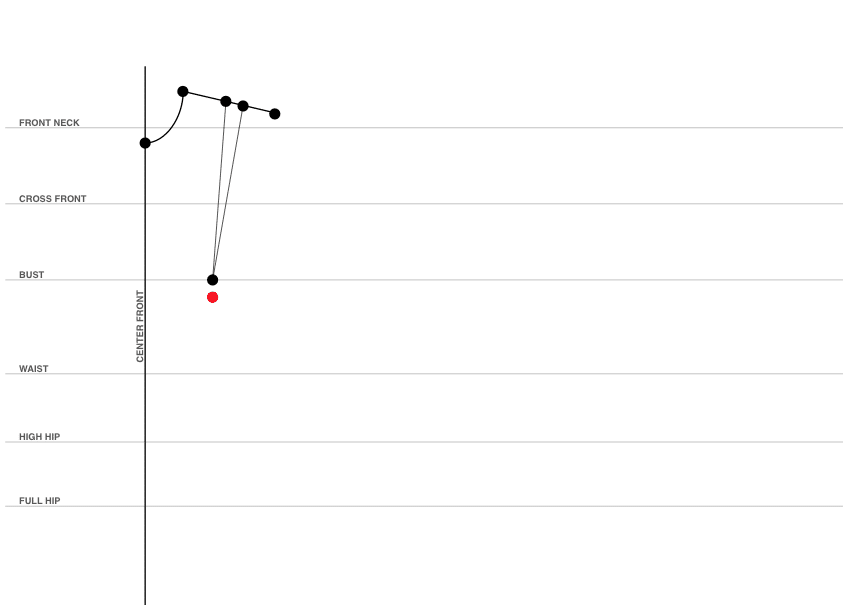
Draw the low bust point 1 inch below the high bust point.
Step 7
draw the waist point
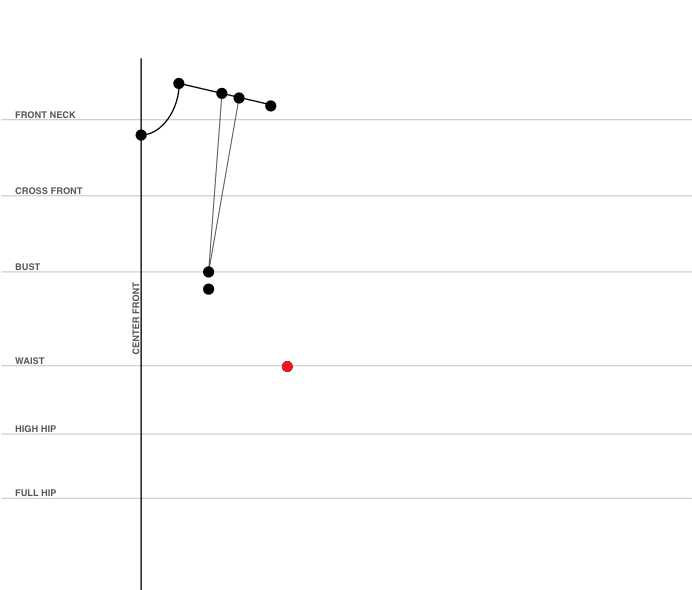
Take your Waist (front) measurement and add 1 inch for a dart. Then mark this distance on the waist gridline.
Step 8
draw the waist dart point
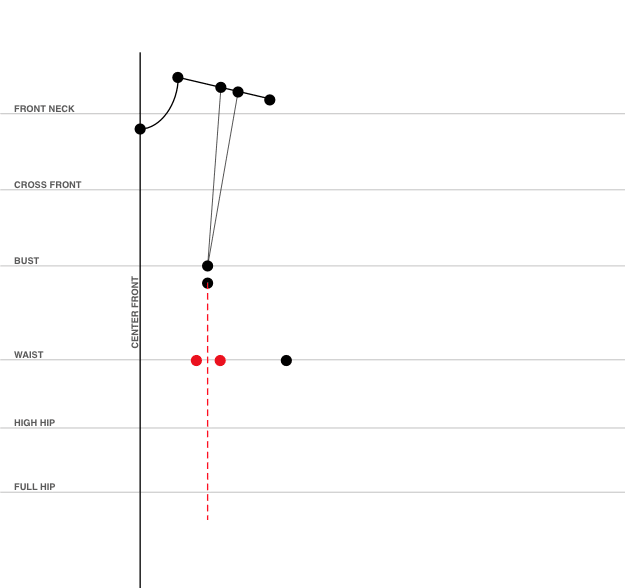
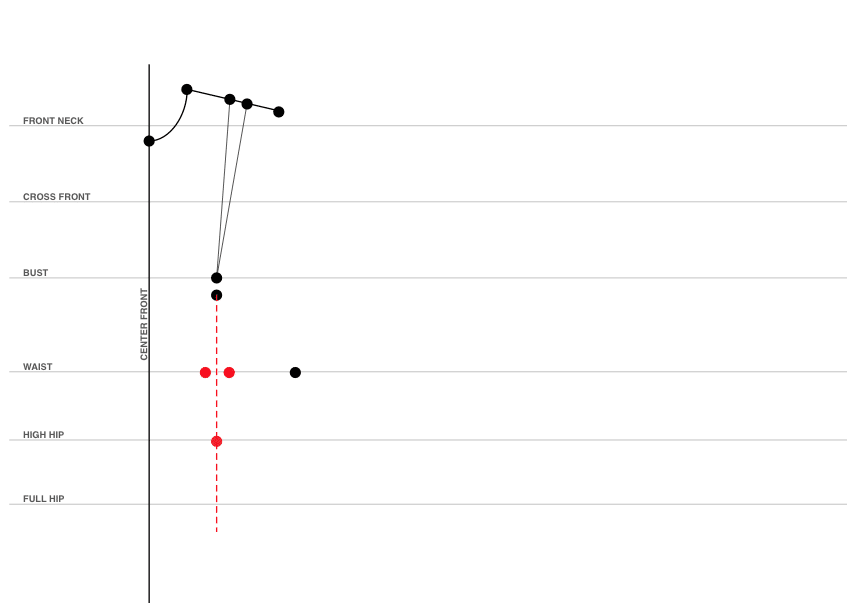
Draw a guideline straight down from the low bust point. Add two dots for a dart 1/2 inch away on both sides of the line.
Then draw another point on the high hip gridline where it intersects with your guideline.
Step 9
lower the waist to complete the dart
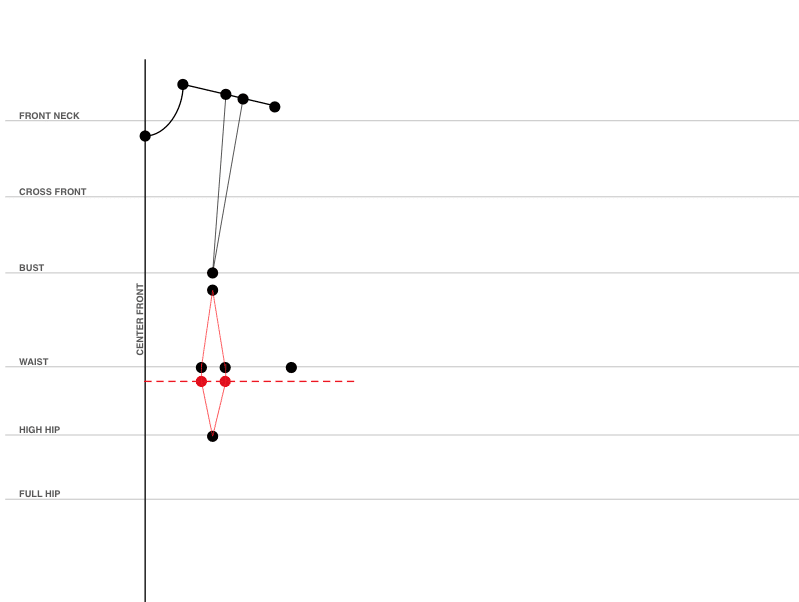
Make another guideline that is 1/2 inch down from the waist. Draw two more dots on this guideline directly below the waist dots. Then draw the legs of your dart connecting all the dots.
Step 10
draw your high hip and full hip points
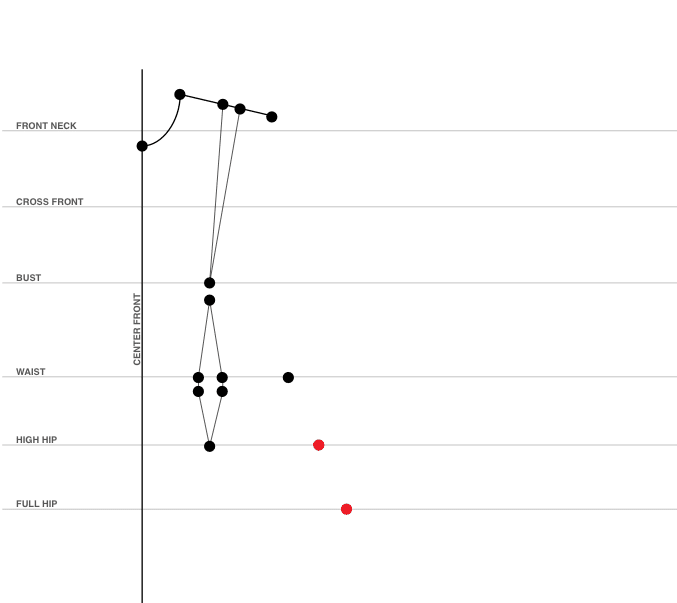
Mark the high hip (front) and full hip (front) dots on their respective gridlines. Then connect the dots to the waist dot.
Step 11
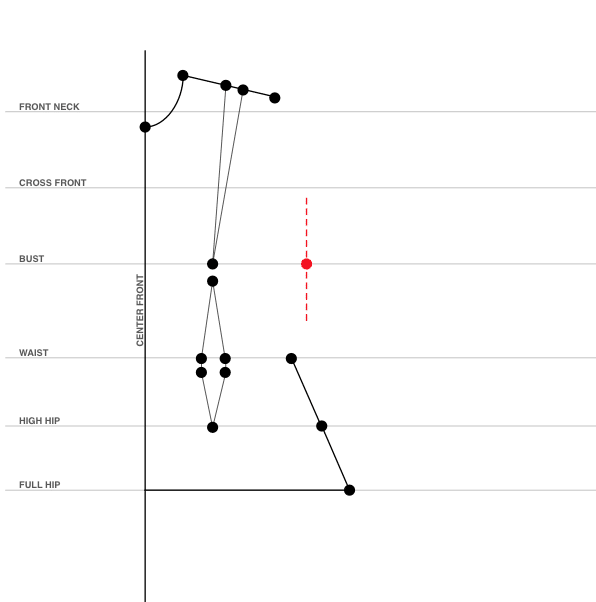
draw your bust point and side length
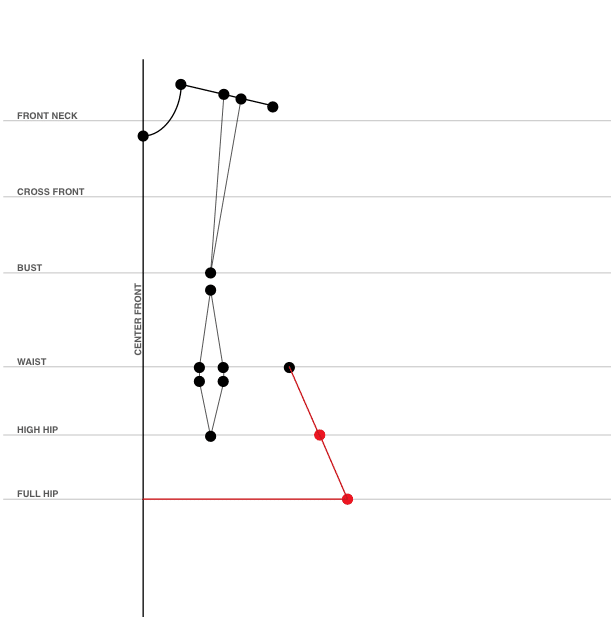
Mark the Bust (front) point on the bust gridline, and draw a vertical guideline intersecting this point.
Look at your Cup size to determine your bust dart width. Add this to your Side length. Draw a line using this length connecting the waist to the vertical guideline.
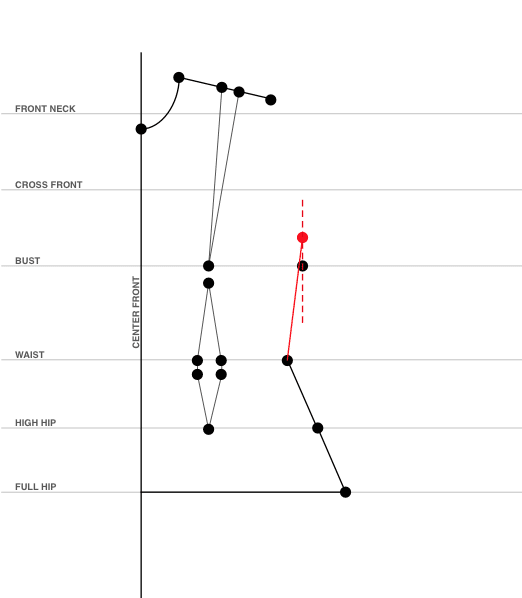
Step 12
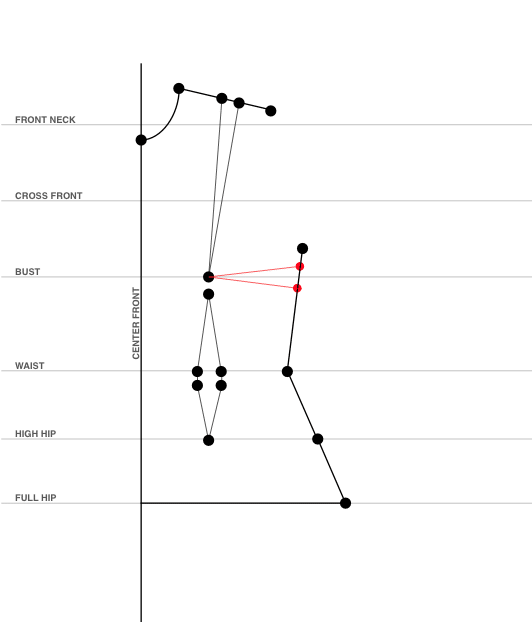
draw your side dart
Draw your side dart (using the length of your cup size), with points an equal distance from the bust grid line. Then, connect those points to the high bust point.
Step 13
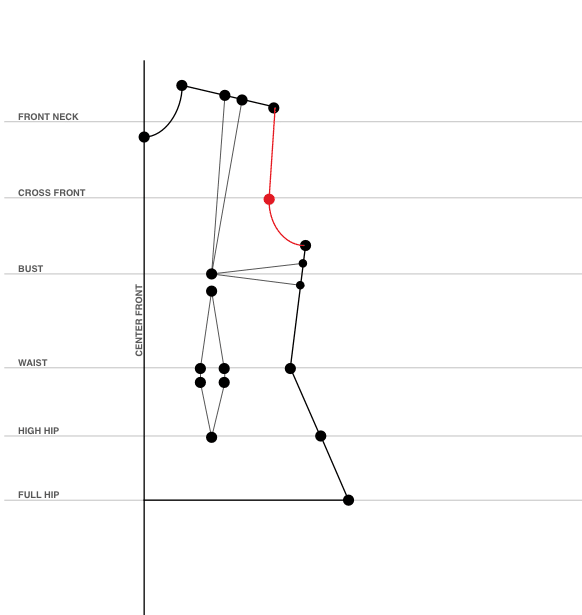
draw your cross front and armhole
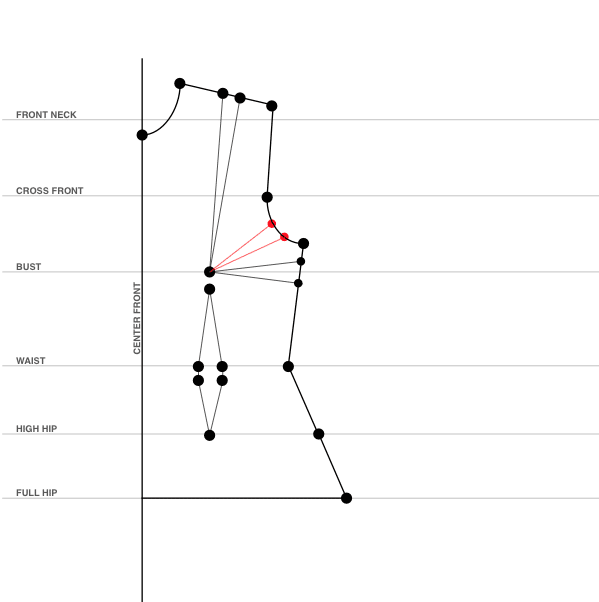
Draw in your Cross front point. As you can see, the shoulder dart goes through this gridline and will be folded out in the final bodice. Add the space the shoulder dart takes up before placing your cross front dot. Then draw in your armhole line.
Step 14
draw your armhole dart
In the deepest part of the armhole curve, place two dart point 1/2″ apart and connect them to the high bust point. This dart is mainly used to keep armholes from gaping open on sleeveless shirts.
Measure this armhole line (skipping the space between the dart points) and compare it to the armhole (front) calculation. You want your drawn line to be equal to or greater than the armhole (front) calculation.
Step 15
fold the darts to true the side
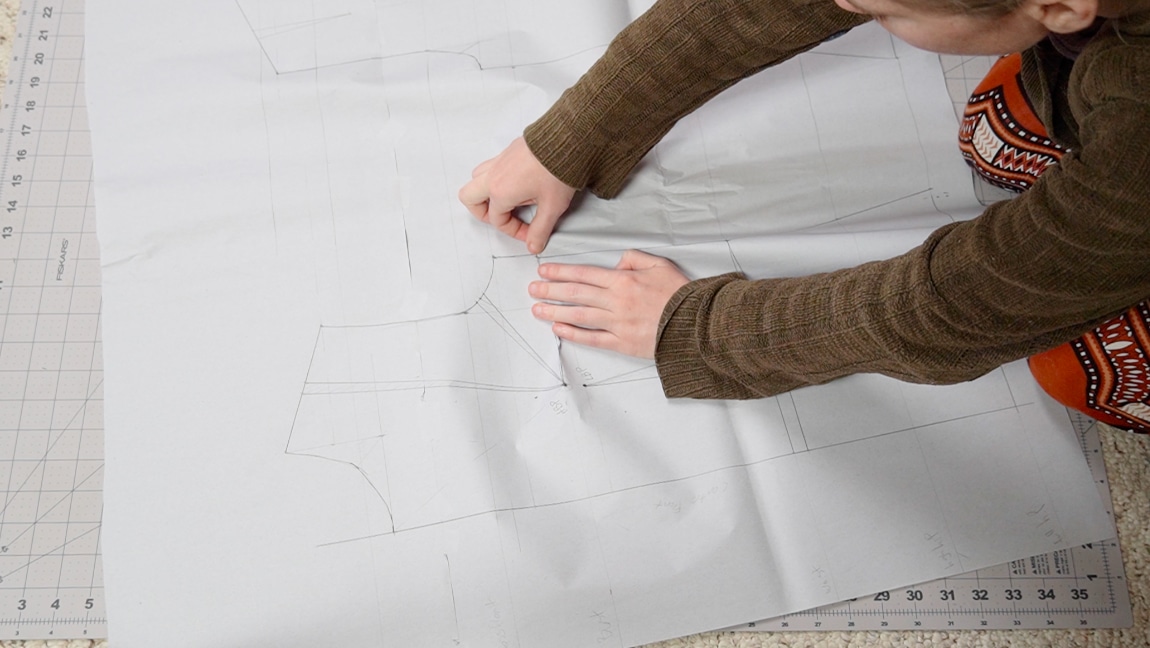
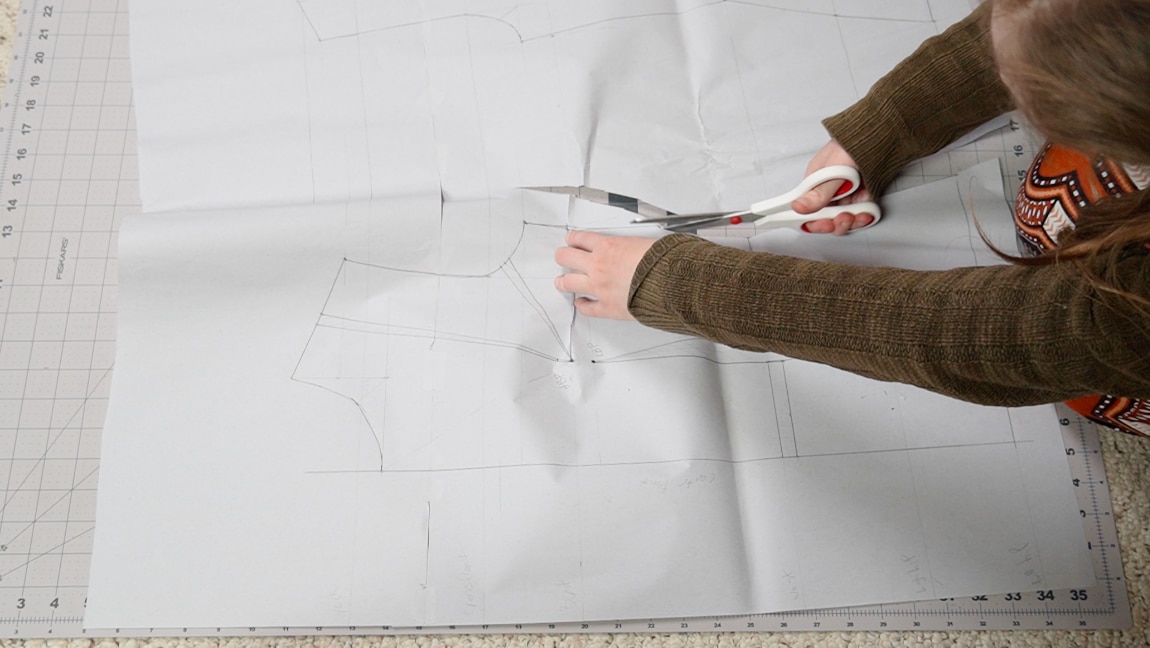
After you’re drawn out your front bodice, fold the darts and draw a straight line (or just cut straight through) to true the sides. This creates that bump that you always see on sewing patterns where there are darts.
Step 16
add seam allowance – continue to part 2 for the back
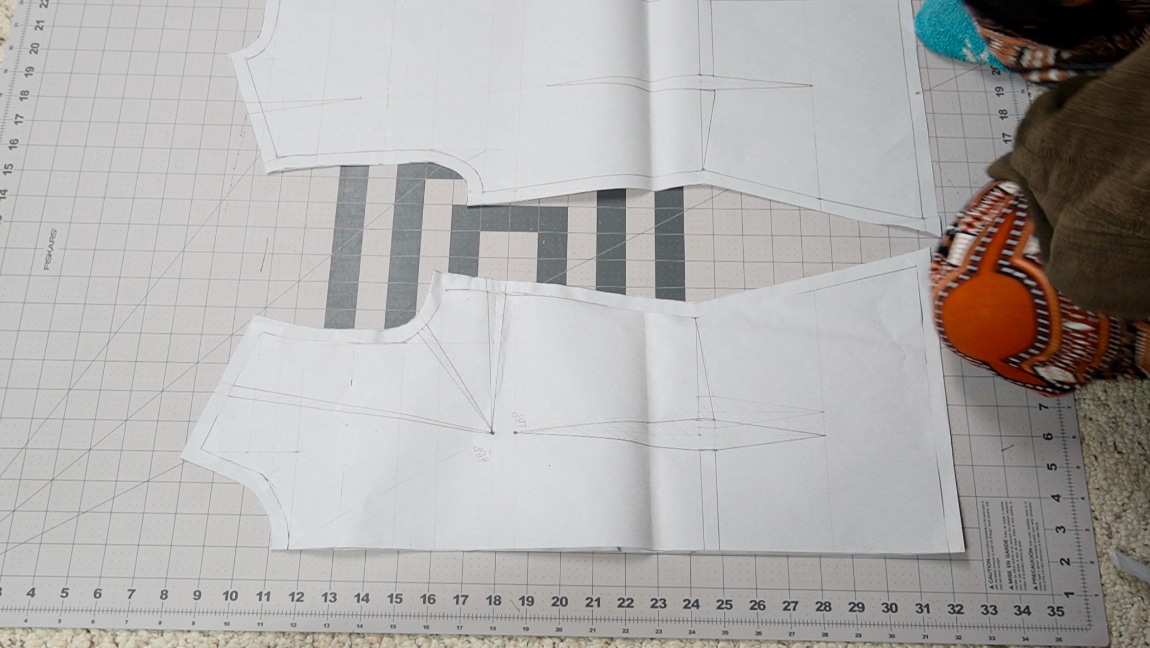
Add seam allowance all along the edge (except for the center front, since that will be on the fold). Continue to part 2 for the back of the sloper.
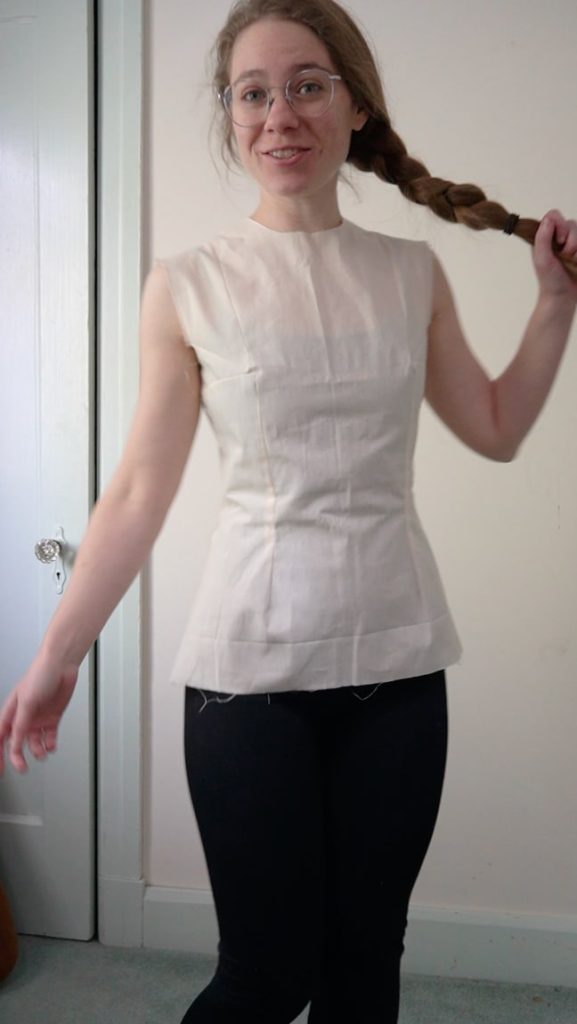
Once you finish the back bodice, sew up your sloper in muslin (or any test fabric) to check the fit and adjust as necessary)